A Well-Trained Puppy is Worth any Effort you Put into it This page contains a lot of helpful information on how to achieve that. Once you buy a puppy from me, I will still be available to answer any questions you may have. One of my daughters is very knowledgeable about puppy training too, and sometimes I consult her. Puppies from my litters are born paper-trained. How cool is that?
The first time you take a litter out of their cage, they instinctively head straight for the papers we lay down and go potty. We’ve even learned to place the papers by the door in our kitchen because that’s another spot they naturally gravitate to for potty time.
It’s as if they know the outdoors is beyond the door and that’s where they’re supposed to go potty. I’m not sure if other breeders experience this, but we certainly do. These puppies are so smart and easy to train.
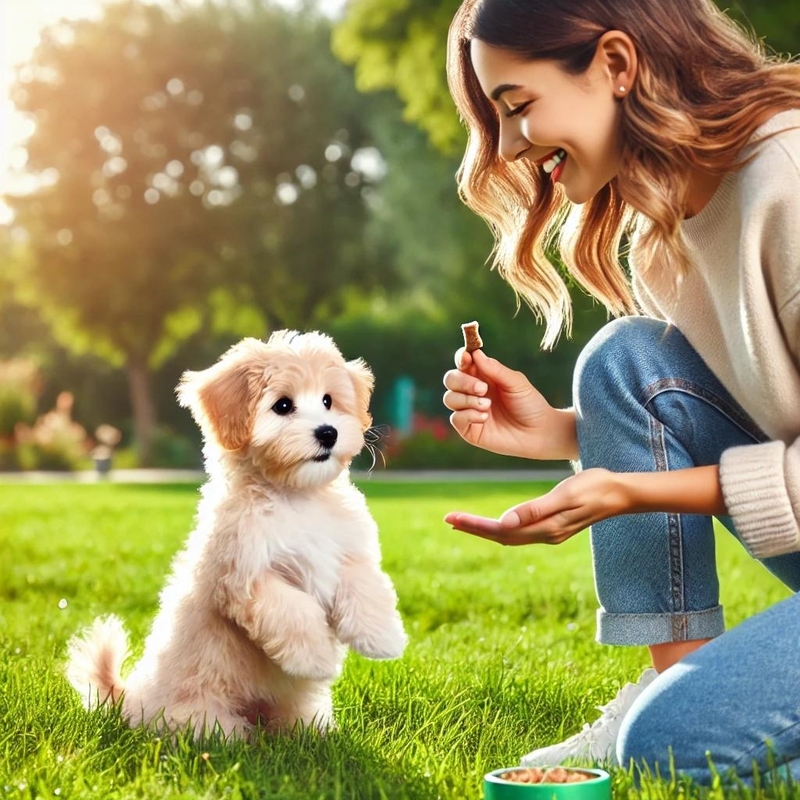
How to Train your Puppy When you get up in the morning, have a small dog treat ready, along with your clicker, and take your puppy outside. If this is your first puppy, choose a spot where you want him to go, and take him to the same spot every time. Stay with him while he goes to the bathroom. Soon enough, you’ll be able to just “let him out.” He’ll sniff around, walk in a little circle, and go. As soon as he does, give him a treat and praise him! If you’re using a clicker (which I highly recommend), click it once when he goes. Be consistent with your praise words and act extremely happy when he goes to the bathroom. Typically, he’ll go twice, so don’t rush him back inside too soon.
Soft or Tiny Treats are the Best for Training as they Provide Instant Gratification
If the treat takes too long to chew, your puppy might forget why he got it! If the treat is too big, break it into smaller pieces. I haven’t found any store-bought treats that are healthy for puppies, and many dogs don’t even like them. I recommend treats from Life’s Abundance when you order your dog food.
Please avoid “greenies,” especially for puppies under six months old. Instead, use real meat—raw is great for its enzymes or cooked. Avoid lunch meats as they contain sodium nitrates, which are harmful and can make your dog sick.After going to the bathroom, take your puppy inside. You want him to associate going outside with going potty. After about 20-30 minutes of playtime, he’ll likely need to go again, so take him outside and repeat the process. If you can’t keep an eye on him or if he didn’t go, put him in his cage.
This is essential because it’s harder to train a puppy once they’ve gotten used to going to the bathroom indoors. Some people use a timer to remind them to take the puppy out regularly. If your puppy is resting or sleeping, you don’t need to worry.If you catch your puppy going inside, firmly say “no” and quickly take him outside (gently, of course).
Don’t bother with a treat or the clicker in this instance—just get him outside so he understands the concept. Consistency and quick action are key to effective training.
Clicker training speeds up the process by up to 50% because it provides a consistent sound to reinforce good behavior. Human voices vary in tone, even if we don’t realize it, but the clicker delivers a steady, recognizable signal. Almost all professional animal trainers use clickers. Before using the clicker for training, teach your puppy what it means. Have some soft treats ready, click the clicker, and immediately give him a treat. Repeat this a few times so he associates the clicker with something good.Focus on one command at a time so as not to overwhelm your puppy. Once he’s potty trained, you can use the treats and clicker for other types of training. Some people have taken their puppies to doggie classes where they learn commands like sit, but it’s often too much for a puppy who’s still being potty trained. Prioritize potty training first, then move on to other lessons.Make sure to have plenty of chew toys available—at least two in every room. Avoid rawhides and “greenies,” as they can be choking hazards. If you catch your puppy chewing on something inappropriate, firmly say “no” and redirect him to one of his toys. Using a loud “no” can be effective in correcting unwanted behavior.Here’s a helpful tip: have a few rinsed pop cans filled with coins and taped shut. Toss them next to the puppy or rattle them when he’s misbehaving. Another option is to sprinkle cayenne pepper on items like table legs—he’ll only try chewing them once after that! Make sure your puppy always has access to his toys. We keep ours in a decorative tin, and our puppies love digging through it to find their favorite toy.Lastly, what I’ve outlined here works! It doesn’t matter the age, sex, or breed of my puppies—they get trained in 3-7 days. Sometimes, if there’s trouble, it’s because the puppy isn’t being crated during training.